
I have a daughter, her name is Helga. I named her Helga after my Scandinavian ancestry, as when I image someone kneading and baking bread, a woman of that nature comes to mind. She gets sour when she’s hungry, and flourishes when she’s fed; however, she gets really sleepy when she’s cold, so sometimes I put her in the fridge when I don’t want to feed her. Her tummy DOUBLES in size when I give her a good feeding, kind of like us after eating Thanksgiving dinner!
My daughter however, is not like me; she is made from equal parts flour, and water. I don’t want her getting so big to where she does not fit inside of her home, so I have to dump some of her out before I feed her again. All of my friends and family love her, as she makes delicious bread! But don’t be fooled, just because she eats a lot does not mean she is overweight- in fact, she is VERY active! She bubbles and bursts, and loves to party with her bacteria friends who are created in her home.
This is how I might explain a sourdough starter to a student, or someone who cannot quite grasp the concept of the fermentation process. Being in this age of technology, I learned most of my knowledge regarding how to make my starter via instagram reels, and TikTok. Initially, I was feeding it a 1:1:1 ratio- this means equal parts starter, water, and flour. Ratios in the beginning is tricky, because when you first make it, it only requires flour, and water.
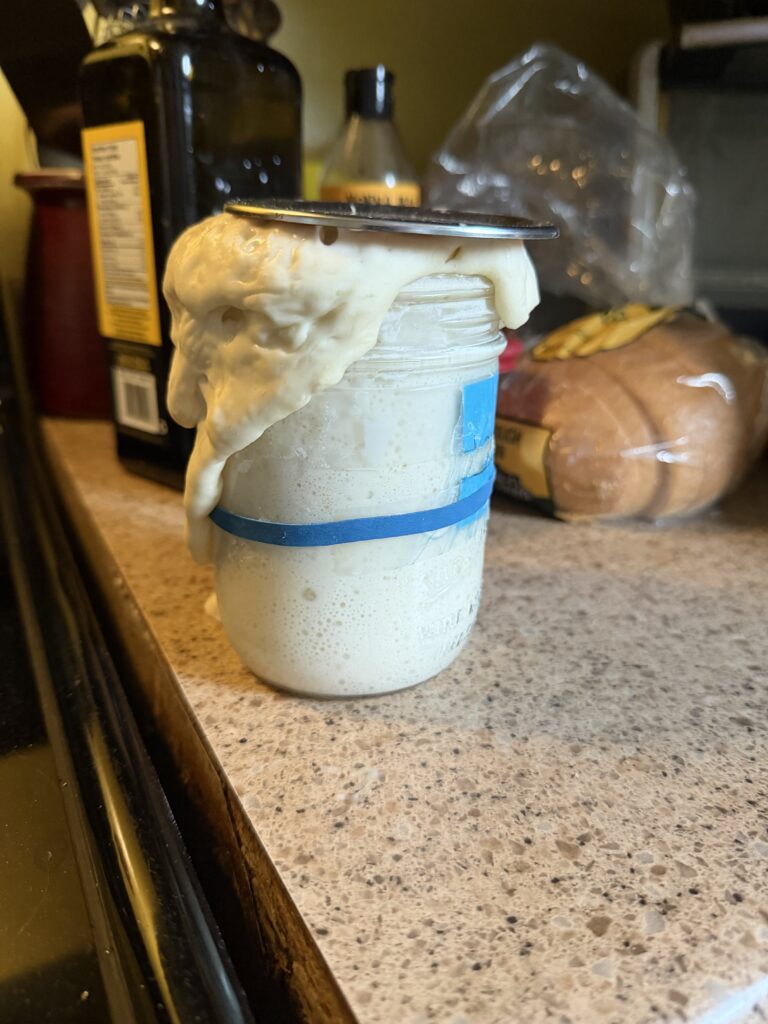
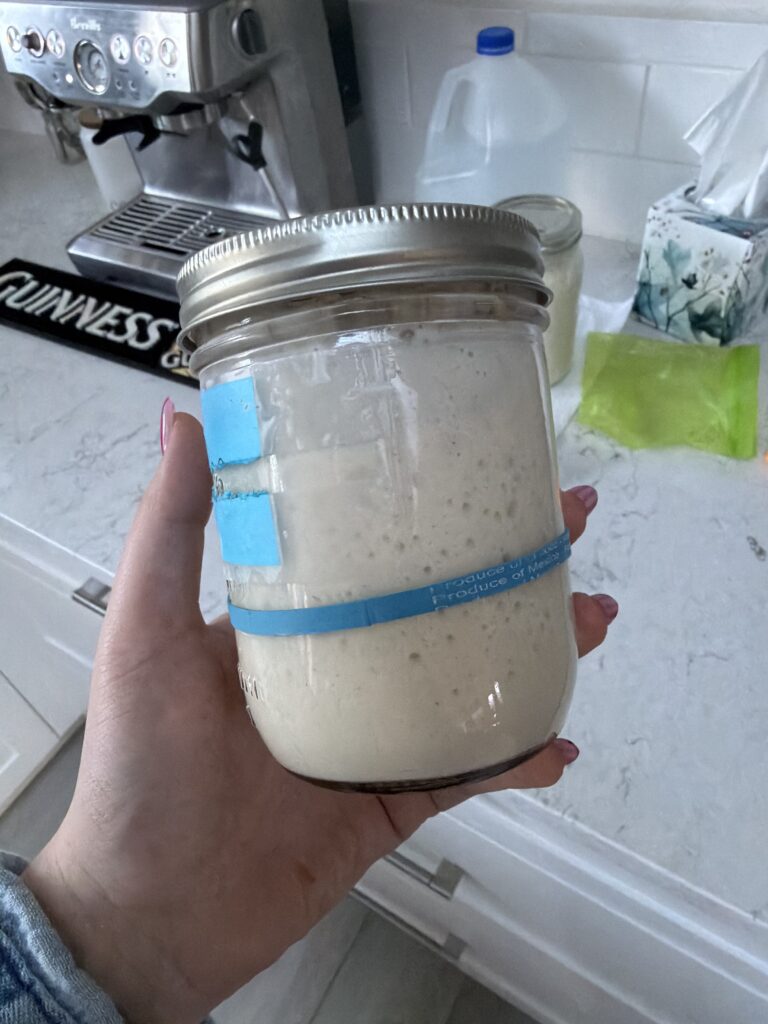
Starting the Starter
Linked below is the recipe I followed by @okaycoolgigi on instagram.
https://www.instagram.com/reel/DLXLl0Su76U/?igsh=MmFyOWpqbjg1azlj
Day 1: Mix 1 cup of bread flour and 1/2 a cup of room temperature filtered water, so it created a muffin batter-like consistency. Mark your GLASS jar on what level your starter is at, so you can see how much it rises. Leave the starter on the counter with a lid on- not too tight. Assure the room temperature is around 21 degrees Celsius, as the starter needs to be semi-warm to rise. Let it rise overnight.
Day 2: Discard half of your starter. Feed it 1/2 cup of bread flour and 1/4 cup of water. Add water as needed to ensure a muffin-like batter as aforementioned. Place the lid on top and mark the starter with the band. If it does not rise yet, keep repeating the process. You should see action within 3-5 days. Repeat step 2 everyday. By day 7-14, your starter should be good to use for a loaf if you see consistent growth.
I did not follow this recipient to a ‘T’, as I only had tap water, and all-purpose flour handy; this still worked! I think people can be too calculated when dealing with sourdough, when in reality, you just need to know your science and optics (this comes with practise and time)! Initially, I was under-feeding my starter; I knew this because it was not bubbly, smelt like vinegar, and held a very smooth consistency (like crepe batter). Once I moved Helga to a bigger jar and started feeding her more, she began to rise consistently after about 3 weeks.
Baking when your starter is at its ‘peak’ is best, because the bacteria is the most active and, therefore, will make your loaf spring better and bulk ferment better! Below is the reel I follow to know when my starter is at peak:
https://www.instagram.com/reel/DQnaCN8jFFt/?igsh=YmlveGR3b21la3Ux
Now that I am well-versed in sourdough science, I typically look for a doubling in size, and a sweet smell. If the starter has a dome-shape, I know it is still rising; conversely, if I see it caving in, I know it has hit its peak and is dropping. It doesn’t make a HUGE difference when you use your starter for baking, as long as it has noticeably risen.
Fun fact: You don’t need to throwaway your discard every time. Discard makes great use for cookies, muffins, and more! Also, storing your discard in the fridge in a separate jar is great for a back-up.
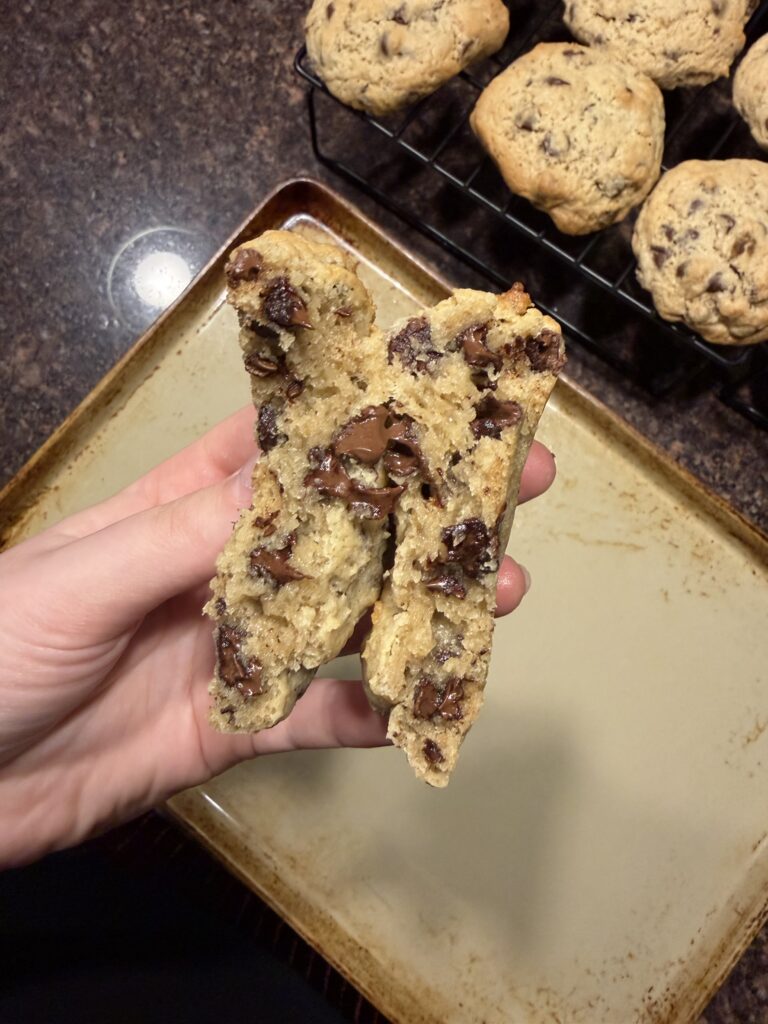
Sourdough Discard Chocolate Chip Cookies: https://littlespoonfarm.com/sourdough-chocolate-chip-cookies-recipe/
Links
Here are some more links to help with building a starter, how ratios work, and the science behind the fermentation:
https://www.instagram.com/reel/DQEx8BHjY5P/?igsh=MW92ZjI0MGw5NnNuZA==
https://www.instagram.com/reel/DQSB-uekpXo/?igsh=MTAxc29zc3dmMGlreA==
https://www.instagram.com/reel/DQ5GEqmEinF/?igsh=MW54OXg2MWFpYnJqeg==
https://www.instagram.com/p/DNLcAByJEmx/?igsh=MWFmbzBpZ2RxY3oyag==
https://www.pantrymama.com/how-does-sourdough-starter-work
The Science
In short, sourdough starter fermentation is a biological discourse between wild yeast and “friendly” lactic acid bacteria. When you mix flour and water, enzymes break down the flour’s starches into simple sugars. The yeast consumes these sugars and breathes out carbon dioxide gas, which gets trapped in the dough’s gluten structure to make it rise. Meanwhile, the bacteria (the same kind found in yogurt) eat the remaining sugars and produce organic acids. These acids create the signature “sour” flavour and lower the pH of the dough, which acts as a natural preservative by killing off harmful pathogens while allowing the wild yeast to thrive!
Comments
One response to “The Science of the Starter”
Kajsa, your metaphor of a child made me curious to read and find out why. I figured things out when you put “Helga” into the fridge. I found your scientific explanation very useful. I think I now understand the passion for sourdough, not just the great taste!